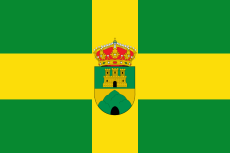
Origins of Oria...
The town de Oria is located in the north of the Comarca del Valle del Almanzora, in the province of Almería. With an area of 235 square kilometers, Oria is the eighth largest town in the province. At present it has 3,100 inhabitants, although in the years before the Civil War it reached 6,000.
It has an altitude of 1022 meters, which means that on very clear days you can see the sea.
The climate is Mediterranean; in winter the temperatures descend below zero degrees, with winds that are blown frequently throughout the winter months.
Gradually the temperatures go up until the summer months during which it reaches an average of 27 degrees during the day with cool nights when the evening temperatures drop.
The town of Oria is about 14km away from the site.
Oria is a small and very pretty typical old Spanish town, it has a few bars, small supermarkets, banks and a petrol station.
The local area is predominantly a farming community and the main crop is Almonds.
The very famous Calar Alto telescope site is very close and easily visited.
Access to the town from airports is great, the roads are very well maintained and the main motorway is not so far away.
In Oria there are many different archaeological remains, left over from a turbulent past, which accompany a varied landscape of green areas and rock forms, which lead the way to the Sierra de las Estancias.
From here there are unrivalled, spectacular views of the province of Almería.
The natural environment here is so beautiful that since the Neolithic era, this area has been made a sacred place for those that have chosen to live here. Due to this, many remains of old sanctuaries and mosques can be seen in the surrounding areas. However, the most outstanding archaeological remains are to be found in the El Picacho area.
A visit to the Iglesia de la Sagrada Familia, dating back to the 16th Century, is definitely worth it and it has a great historical archive inside it.
Walking around the streets of the town you will be able to see what could have been the first ever religious temple of the province, The San Gregorio Ostiense church.
You can end your tour around the municipality with a visit to the Workers´ House of Los Cerricos, where the main attraction is the water springs. The water that comes from them comes from the neighbouring mountains, the most important being that of Polaca and La Roca de Oria.
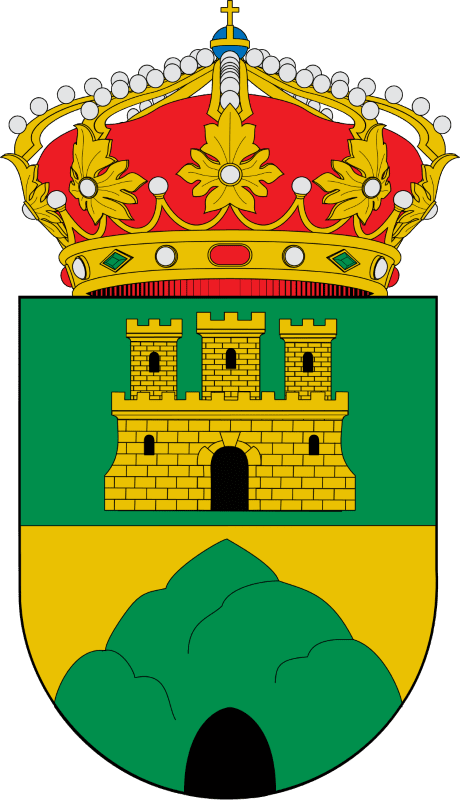
Oria Coat of Arms